

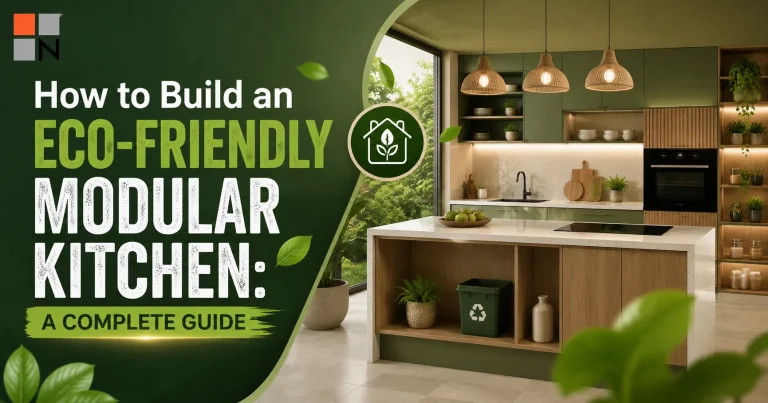
Creating an eco-friendly modular kitchen combines environmental responsibility with modern functionality, proving that sustainable choices don’t require sacrificing style or convenience. As more homeowners prioritize green living, understanding how to build a kitchen that’s both planet-friendly and practical has become essential knowledge.
Choosing Sustainable Base Materials
Your kitchen’s foundation materials significantly impact its environmental footprint. Traditional plywood often involves harmful adhesives and unsustainable forestry practices, while eco-friendly alternatives offer comparable durability with reduced impact.
Sustainable material options:
- Bamboo plywood—rapidly renewable, incredibly durable, naturally moisture-resistant
- Recycled wood composites utilizing reclaimed materials
- Formaldehyde-free MDF with low-VOC bonding agents
- FSC-certified wood ensuring responsible forest management
These materials provide structural integrity comparable to conventional options while significantly reducing environmental impact and improving indoor air quality.
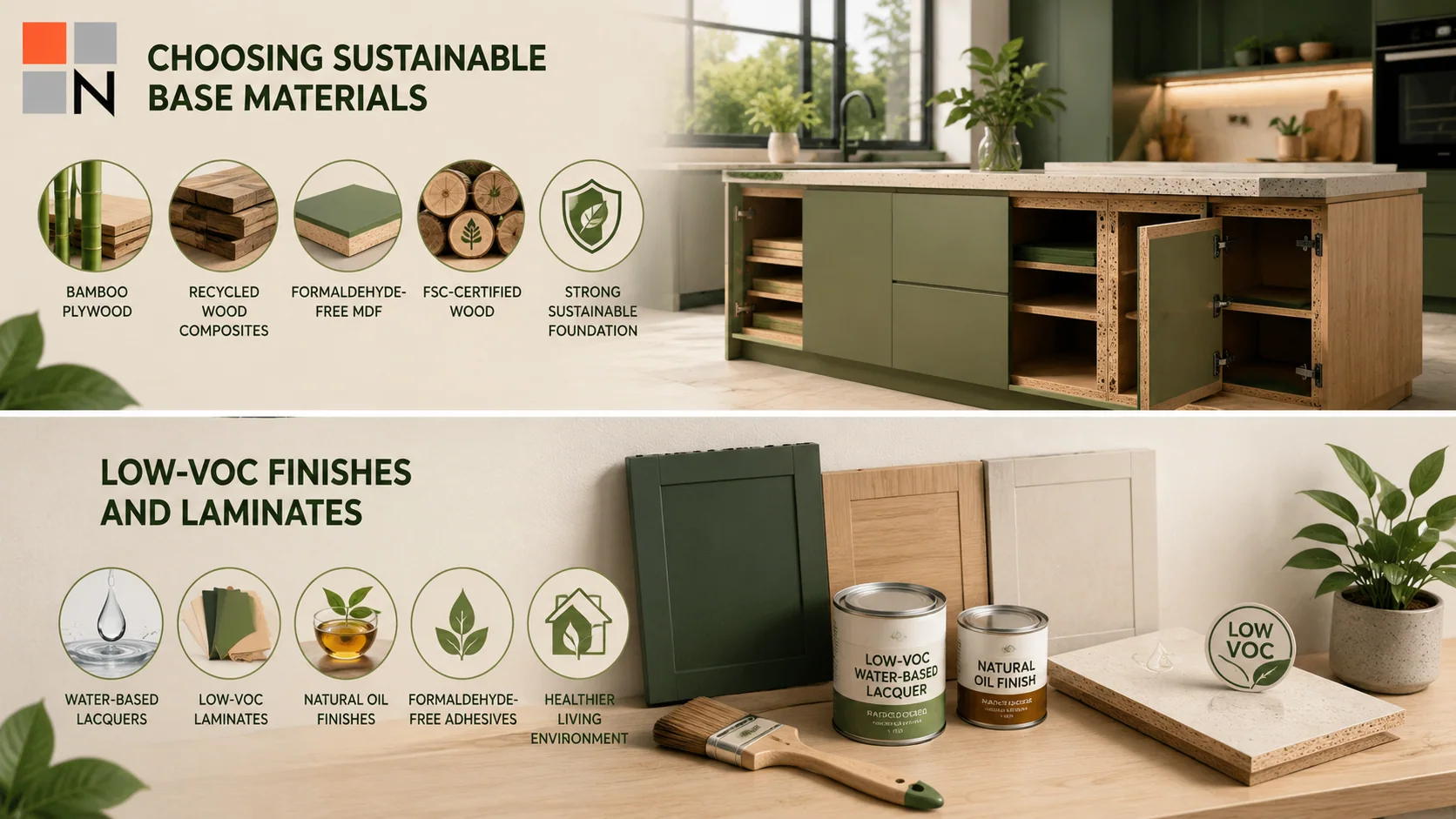
Low-VOC Finishes and Laminates
Volatile Organic Compounds (VOCs) from conventional finishes contribute to indoor air pollution and health concerns. Eco-conscious kitchens prioritize:
- Water-based lacquers instead of solvent-based finishes
- Low-VOC laminates certified for indoor air quality
- Natural oil finishes for wood surfaces
- Formaldehyde-free adhesives throughout cabinet construction
These choices create healthier living environments while maintaining the aesthetic appeal and durability modern kitchens demand.
Energy-Efficient Appliance Selection
Appliance choices dramatically impact your kitchen’s ongoing environmental footprint. Energy-efficient models reduce both electricity consumption and long-term operational costs.
Priority eco-friendly appliances:
- BEE 5-star rated refrigerators minimizing electricity usage
- Induction cooktops offering superior energy efficiency over traditional gas
- Energy Star-rated dishwashers reducing water and power consumption
- LED under-cabinet lighting using 75% less energy than conventional options
Investing in quality energy-efficient appliances typically pays for itself through reduced utility bills within 2-3 years while supporting environmental sustainability.
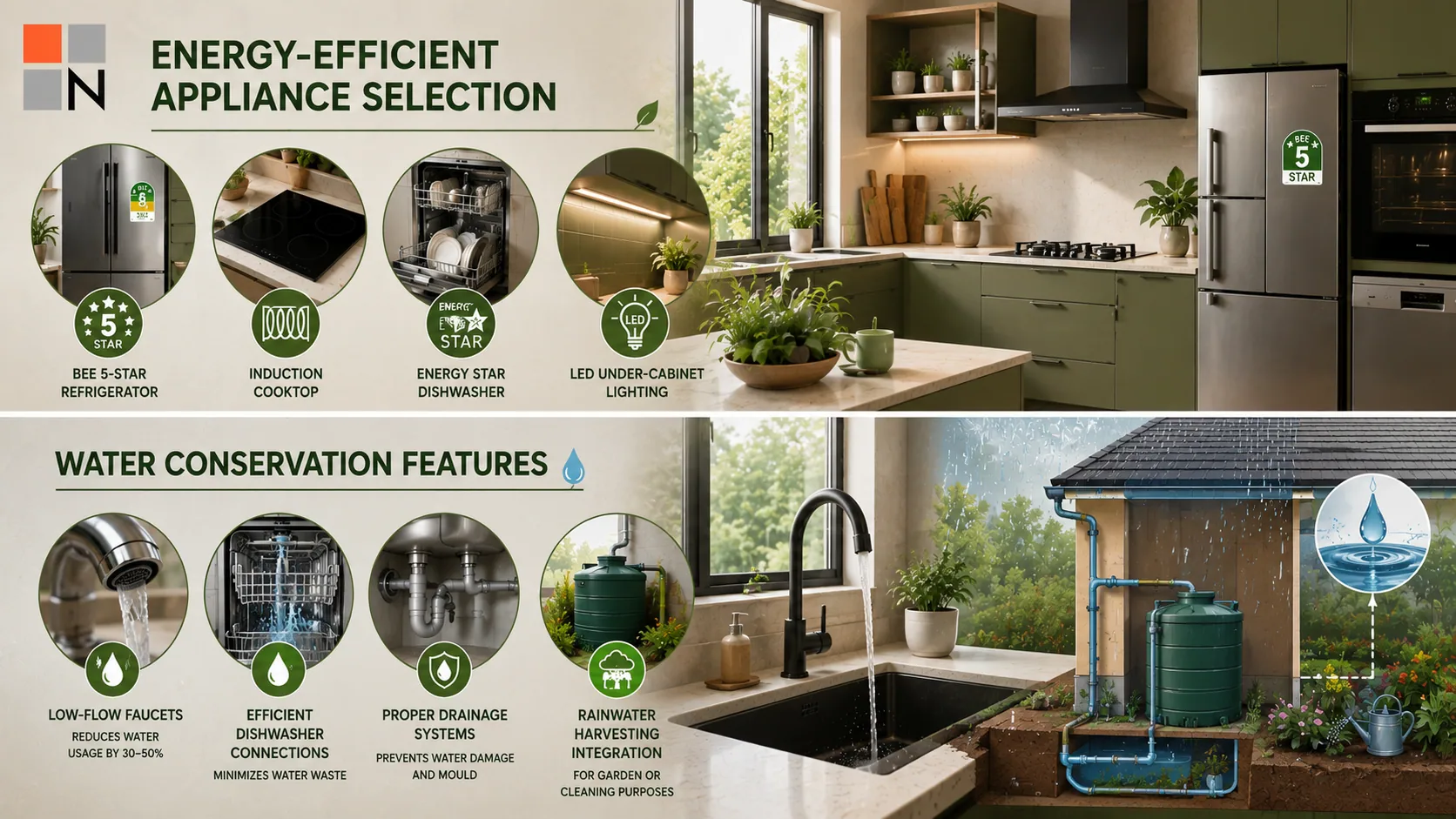
Water Conservation Features
Sustainable kitchen design incorporates water-saving elements that reduce consumption without compromising functionality:
- Low-flow faucets with aerators reducing water usage by 30-50%
- Efficient dishwasher connections minimizing water waste
- Proper drainage systems preventing water damage and mould
- Rainwater harvesting integration for garden or cleaning purposes (where applicable)
Natural Lighting and Ventilation
Strategic design maximizing natural light and airflow reduces dependency on artificial lighting and mechanical ventilation, lowering energy consumption significantly.
Design considerations include:
- Window placement optimizing daylight throughout cooking hours
- Cross-ventilation reducing exhaust fan dependency
- Skylights where structurally feasible for natural illumination
- Light-colored surfaces reflecting natural light effectively
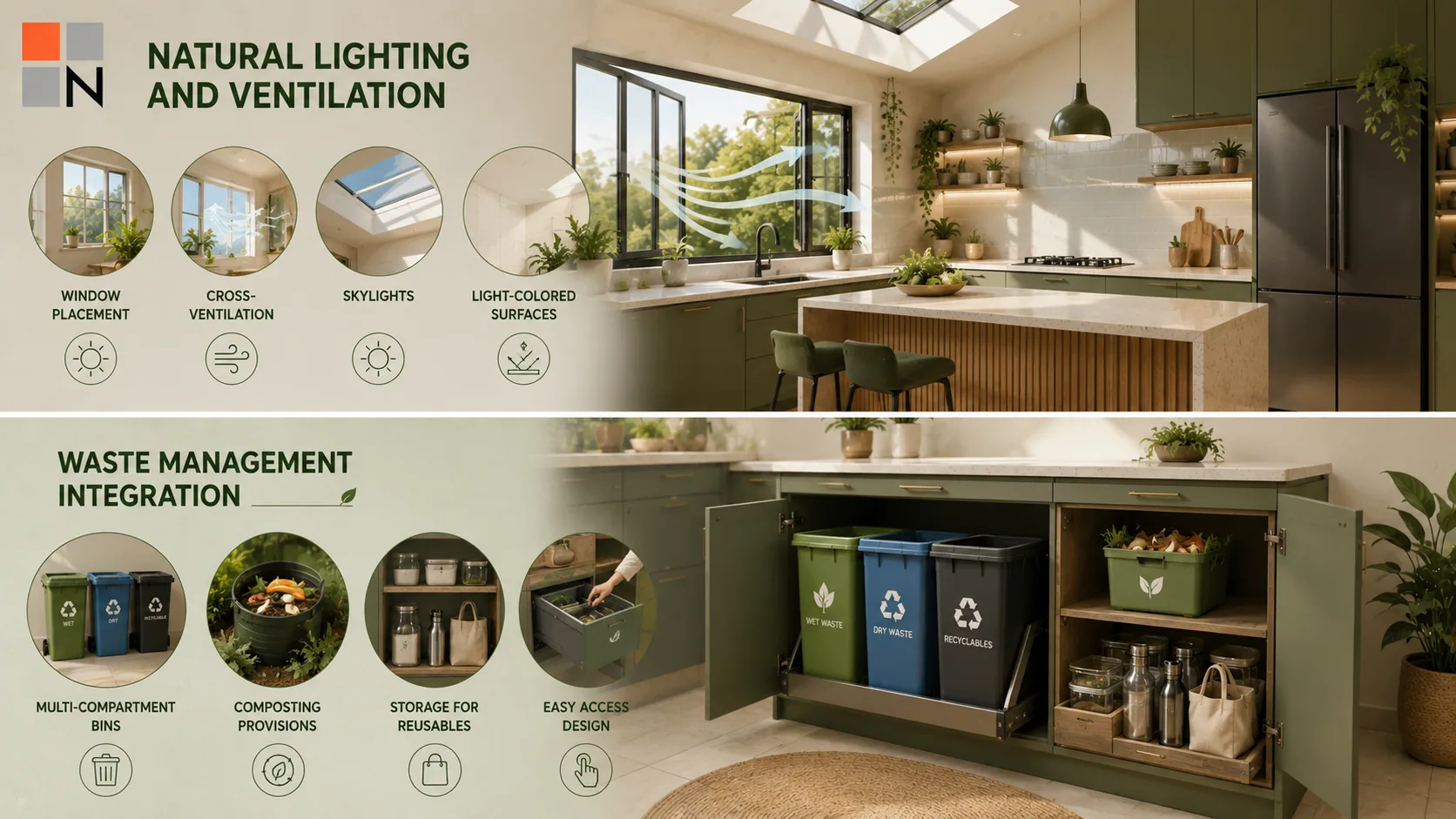
Waste Management Integration
Built-in recycling systems encourage sustainable habits by making waste segregation convenient rather than an afterthought.
Essential waste management features:
- Multi-compartment bins separating wet waste, dry waste, and recyclables
- Composting provisions for organic kitchen waste
- Designated storage for reusable containers and bags
- Easy-access design encouraging consistent recycling habits
Smart Storage Reducing Waste
Efficient storage design minimizes food waste through better organization and visibility, while modular systems allow future reconfiguration without complete replacement.
Sustainable storage solutions:
- Transparent containers improving food visibility and reducing spoilage
- Adjustable shelving accommodating changing needs without renovation
- Proper ventilation in storage areas preventing premature food spoilage
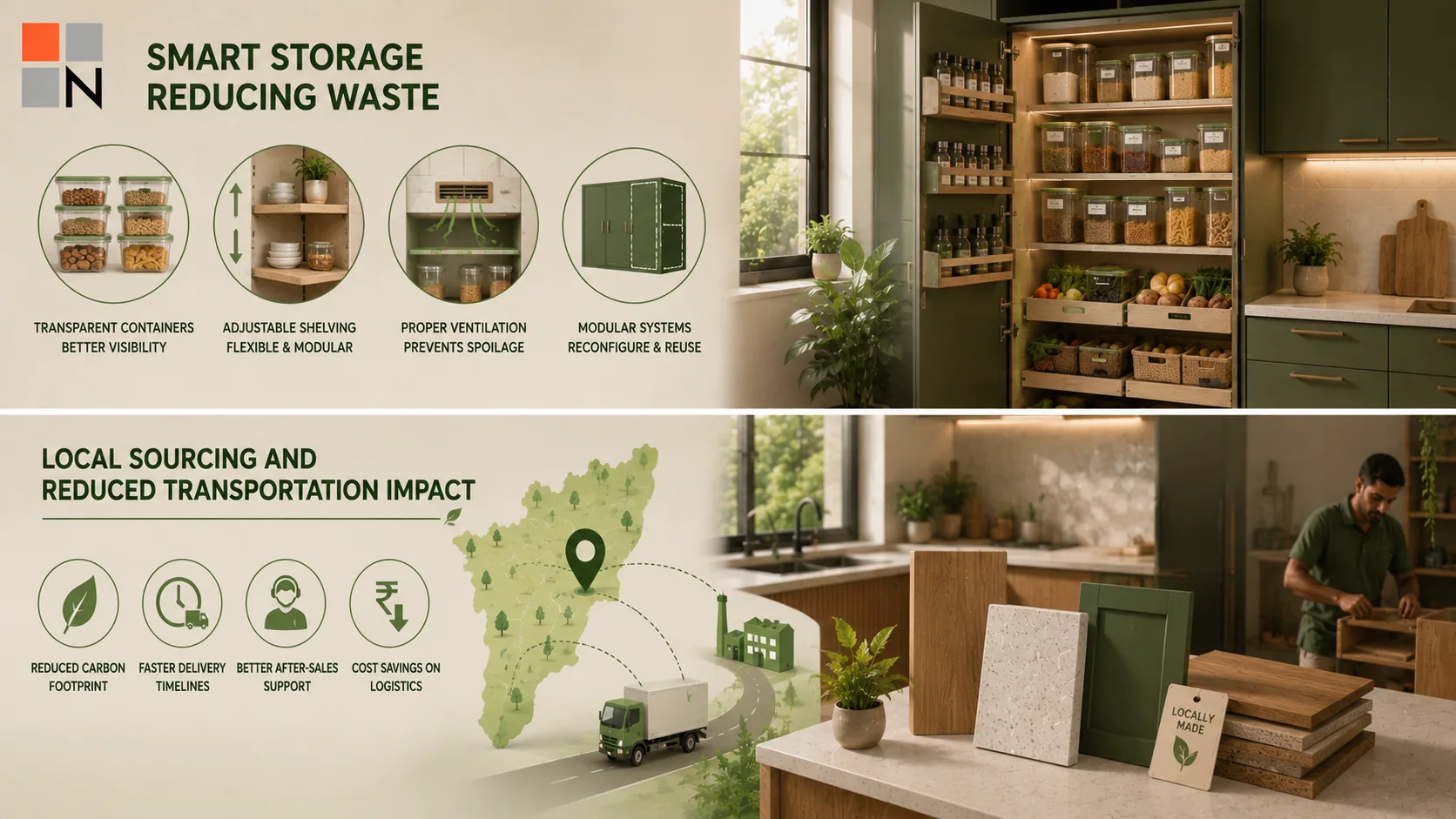
Local Sourcing and Reduced Transportation Impact
Choosing locally manufactured materials and fixtures reduces transportation-related carbon emissions while often supporting regional craftsmanship and economies.
Local sourcing benefits:
- Reduced carbon footprint from shorter transportation distances
- Faster delivery timelines for project completion
- Better after-sales support through regional manufacturers
- Cost savings from reduced logistics expenses
Long-Term Durability Over Disposable Trends
True sustainability means choosing quality materials and timeless designs that last decades rather than trend-driven elements requiring frequent replacement. Durable, well-maintained kitchens ultimately reduce waste generation more effectively than any single eco-feature.
Bringing Your Eco-Friendly Vision to Life
Building a genuinely sustainable modular kitchen requires balancing environmental goals with practical functionality—a balance achieved through experienced design guidance and access to quality sustainable materials.
Professional expertise ensures eco-friendly choices don’t compromise durability, aesthetics, or budget. Understanding which certifications matter, which materials truly perform, and how to integrate sustainability seamlessly requires specialized knowledge most homeowners haven’t developed.
When planning your eco-friendly kitchen transformation, partnering with designers who understand sustainable material sourcing and green design principles ensures your vision becomes reality without environmental compromise. Northwest Interiors integrates eco-conscious practices into modular kitchen designs across Chennai, Madurai, Trichy, and Coimbatore, helping environmentally aware homeowners create beautiful, sustainable spaces that align with their values.
Building green isn’t just an environmental statement—it’s an investment in healthier living, lower operational costs, and lasting quality that benefits both your family and the planet.
Ready to Go Green with Your Kitchen Renovation?
Get your FREE eco-friendly kitchen design consultation! Our sustainability-focused designers will recommend certified green materials, energy-efficient layouts, and budget-friendly eco-solutions tailored to your lifestyle. Discover how sustainable choices can transform your kitchen without breaking the bank. Book your free eco-kitchen consultation – Design responsibly, live beautifully!