


Every renovation quote seems different, leaving many property owners confused about fair pricing and wondering why costs vary so dramatically between contractors. Understanding the key factors influencing renovation costs empowers you to budget accurately, avoid surprises, and make informed decisions throughout your project.
Scope and Extent of Work
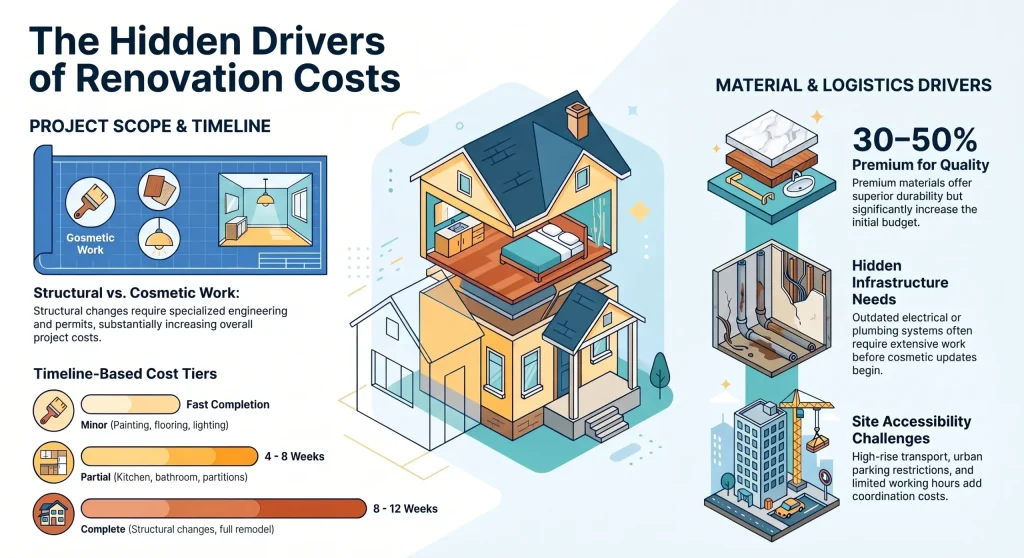
The scale of renovation is the primary cost driver. Minor cosmetic updates cost significantly less than structural modifications requiring demolition and rebuilding.
Cost tiers based on scope:
- Minor Renovations (painting, flooring, lighting) – Lower cost, faster completion
- Partial Renovation (kitchen, bathroom, partitions) – Moderate investment, 4-8 weeks
- Complete Renovation (structural changes, full remodel) – Highest investment, 8-12 weeks
Structural changes—moving walls, altering layouts, or modifying load-bearing elements—require specialized engineering assessment and permits, substantially increasing costs beyond surface-level updates.
Material Selection and Quality Grade
Material choices create the widest cost variations in renovation budgets. The same square footage can cost dramatically different amounts depending on the selected quality tier.
Material cost factors include:
- Flooring options: Basic ceramic tiles vs premium vitrified or engineered wood
- Countertop materials: Laminate vs granite vs quartz
- Fixture quality: Standard vs premium sanitary ware and hardware
- Paint grade: Economy vs premium low-VOC formulations
Premium materials typically cost 30-50% more than budget alternatives but offer superior durability, potentially reducing long-term replacement costs.
Electrical and Plumbing Complexity
Infrastructure modifications significantly impact overall project costs. Simple fixture replacements cost far less than complete rewiring or repiping.
Key considerations:
- Additional electrical points for modern appliances and technology
- Plumbing rerouting for kitchen or bathroom relocations
- Panel upgrades to handle increased electrical loads
- Waterproofing requirements for wet areas
Properties with outdated electrical systems or corroded plumbing often require extensive infrastructure work before cosmetic renovation can proceed, adding unexpected costs.
Labor Costs and Specialist Requirements
Skilled labour commands premium rates, particularly for specialized work like custom carpentry, intricate tile work, or false ceiling installation. Labour costs vary by:
- Project complexity requiring specialized expertise
- Timeline urgency (rushed projects often cost more)
- Location accessibility affecting material transport and labour logistics
- Multiple trade coordination for complex renovations
Site Conditions and Accessibility
Existing property conditions directly influence renovation costs. Older buildings often reveal hidden issues—outdated wiring, water damage, or structural concerns—that are only discovered during demolition.
Accessibility factors also matter significantly:
- High-rise apartments requiring material transport via elevators
- Parking and loading restrictions in dense urban areas
- Building society approvals adding time and coordination costs
- Limited working hours in residential complexes
Design Complexity and Customization
Custom designs with intricate detailing, curved elements, or unique layouts require more time, skilled craftsmanship, and often specialized materials—all increasing costs compared to standard, straightforward designs.
Furniture customization, built-in storage solutions, and unique architectural features add value but require careful budget planning to accommodate the additional investment.
Geographic Location and Market Rates
Regional cost variations exist even within Tamil Nadu. Chennai’s renovation costs often differ from those in Madurai, Trichy, or Coimbatore due to varying material transportation costs, labour availability, and market competition.
Making Informed Budget Decisions
Understanding these cost factors helps property owners set realistic budgets and avoid the frustration of mid-project financial surprises. The key lies in thorough planning—detailed scope definition, upfront material selection, and a comprehensive site assessment before work begins.
Transparent contractors provide detailed breakdowns explaining exactly what drives your project’s cost, rather than vague estimates that lead to disputes later. When evaluating renovation partners, prioritize those offering comprehensive consultations that identify potential cost factors before committing to your budget.
Northwest Interiors approaches every renovation project with complete cost transparency, conducting thorough site assessments across Chennai, Madurai, Trichy, and Coimbatore to identify all relevant factors up front—ensuring accurate budgeting and avoiding hidden surprises throughout your renovation journey.
Smart renovation planning starts with understanding these cost drivers, allowing you to make strategic decisions about where to invest and where to economize based on your priorities and budget.