

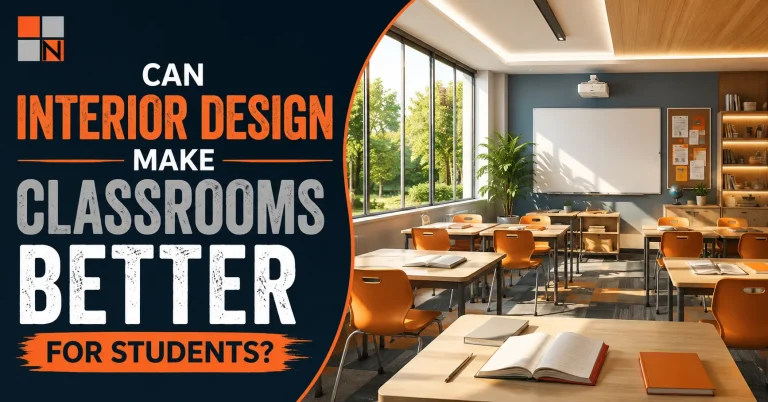
The traditional classroom—rows of desks facing a blackboard—is rapidly becoming a thing of the past. Research increasingly confirms what educators have long suspected: classroom design directly impacts learning outcomes, student behaviour, and academic performance. The right interior design isn’t just about aesthetics; it’s a powerful educational tool.
The Science Behind Learning Spaces
Environmental psychology research demonstrates that physical surroundings significantly influence cognitive function, concentration, and information retention. Studies show that well-designed classrooms can improve student performance by up to 25% compared to poorly designed traditional spaces.
This isn’t surprising—children spend thousands of hours in classrooms during their formative years, making the learning environment as crucial as curriculum content itself.
Natural Light: The Foundation of Better Learning
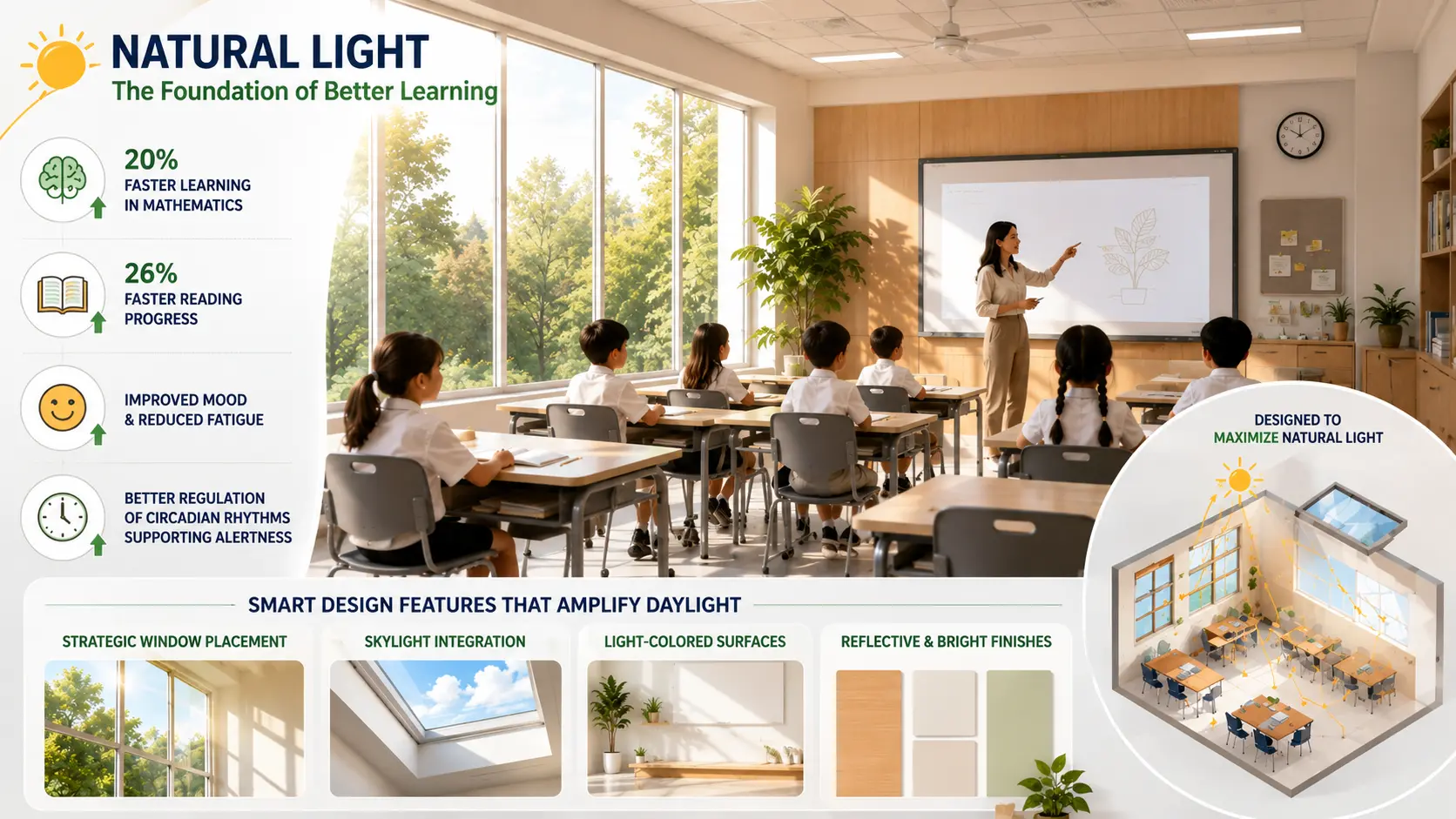
Natural lighting ranks among the most impactful design elements for academic performance. Studies reveal students in naturally lit classrooms show:
- 20% faster learning rates in mathematics
- 26% faster reading progress
- Improved mood and reduced fatigue
- Better regulation of circadian rhythms supporting alertness
Strategic window placement, skylight integration, and light-colored surfaces that reflect natural light maximize these benefits while reducing dependency on artificial lighting.
Flexible Furniture and Spatial Arrangement
Traditional rigid seating limits collaborative learning and movement-based education—both proven to enhance comprehension and engagement. Modern classroom design embraces:
- Modular furniture enabling quick reconfiguration for different activities
- Varied seating options (standing desks, floor cushions, traditional chairs)
- Flexible zones supporting individual work, group collaboration, and presentations
- Adequate spacing preventing overcrowding stress
This adaptability allows educators to shift seamlessly between lecture-style teaching, group projects, and independent study—maximizing pedagogical effectiveness.
Colour Psychology in Educational Spaces
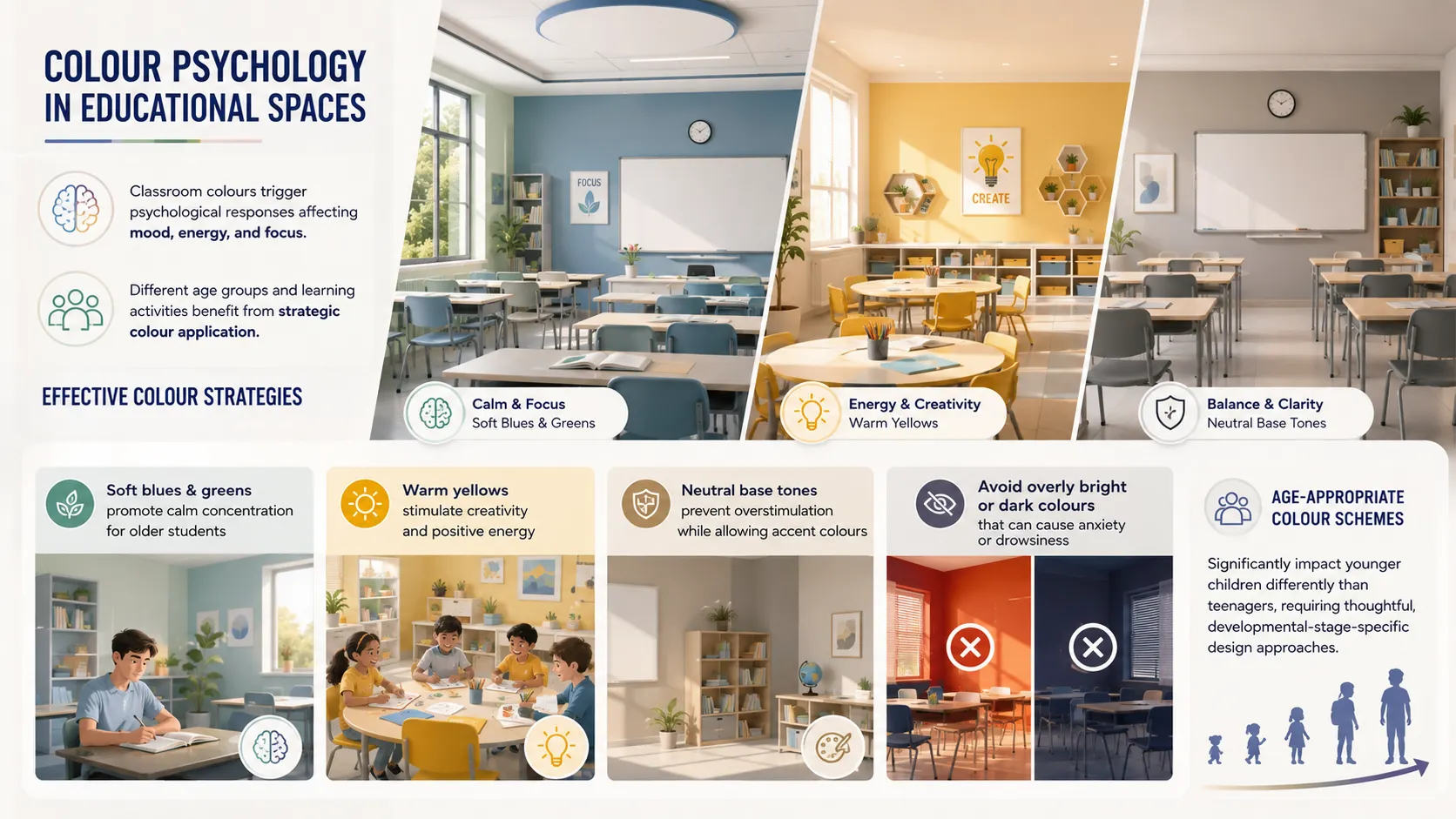
Classroom colours trigger specific psychological responses affecting mood, energy, and focus. Different age groups and learning activities benefit from strategic colour application:
Effective colour strategies:
- Soft blues and greens promote calm concentration for older students
- Warm yellows stimulate creativity and positive energy
- Neutral base tones prevent overstimulation while allowing accent colours
- Avoid overly bright or dark colours that can cause anxiety or drowsiness
Age-appropriate colour schemes significantly impact younger children differently than teenagers, requiring thoughtful, developmental-stage-specific design approaches.
Acoustic Design for Better Focus
Poor acoustics significantly impair learning, causing listening fatigue and reducing information retention. Excessive noise or echo forces students to expend mental energy on filtering sound rather than absorbing content.
Acoustic improvements include:
- Sound-absorbing ceiling panels reducing echo and reverb
- Carpet or acoustic flooring minimizing footstep and chair noise
- Strategic furniture placement breaking up sound reflection
- Proper insulation between classrooms preventing cross-noise interference
Biophilic Design: Nature’s Learning Boost
Incorporating natural elements—plants, natural materials, and nature-inspired patterns—can demonstrably reduce stress and improve concentration. This biophilic design approach connects students with nature even within urban school buildings.
Simple biophilic additions:
- Indoor plants improving air quality and reducing stress
- Natural wood furniture creating warmth and comfort
- Nature-view window positioning where architecturally possible
- Natural material textures (wood, stone) in design elements
Comparison Table (Traditional vs Modern Classroom)
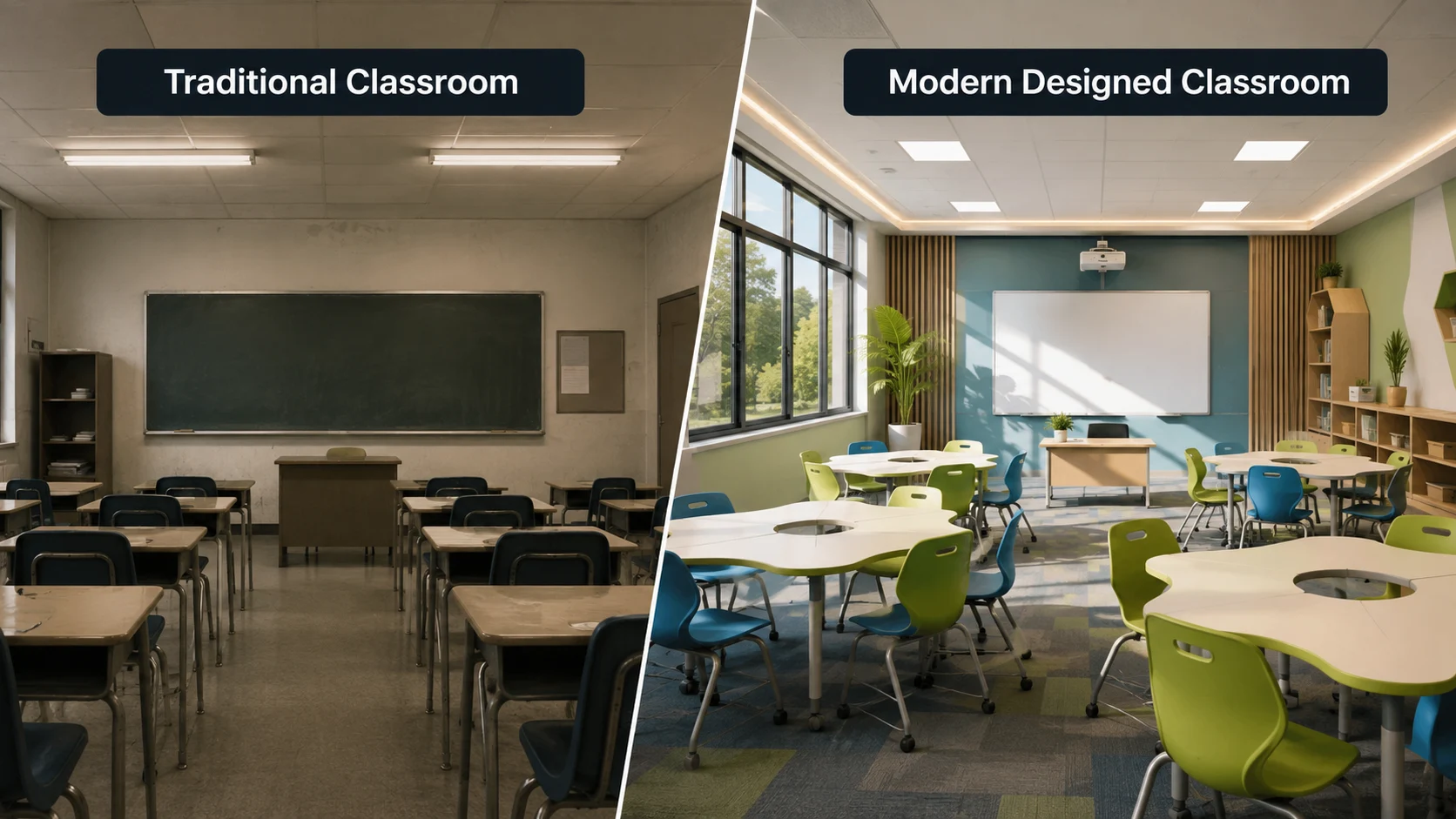
| Aspect | Traditional Classroom | Modern Designed Classroom |
|---|---|---|
| Seating | Fixed rows facing forward | Flexible, reconfigurable arrangements |
| Lighting | Artificial, often harsh | Natural light-optimized with LED support |
| Color Scheme | Plain white/beige walls | Strategic color psychology application |
| Noise Control | Minimal acoustic treatment | Sound-absorbing materials integrated |
| Nature Elements | Rarely incorporated | Biophilic design (plants, natural materials) |
| Storage | Often cluttered, visible mess | Organized, concealed storage systems |
| Technology | Retrofitted, messy wiring | Thoughtfully integrated, clean setup |
| Student Outcomes | Standard performance levels | Up to 25% improved performance |
Technology Integration Without Distraction
Modern classrooms require thoughtful technology integration—accommodating digital learning tools without creating visually chaotic environments. Concealed wiring, dedicated charging stations, and purposeful screen placement maintain both functionality and aesthetic calm.
Creating Learning Environments That Truly Work
Transforming classrooms requires understanding educational psychology alongside design principles—a specialized combination most standard interior approaches overlook. Effective educational design balances stimulation and calm, flexibility and structure, creating spaces where students genuinely thrive.
When planning educational space renovations, partnering with designers who understand both learning science and practical design implementation ensures your investment truly benefits student outcomes. Northwest Interiors brings specialized expertise in creating functional, inspiring educational environments across Chennai, Madurai, Trichy, and Coimbatore, helping institutions design classrooms where students don’t just attend—they excel.
Thoughtful classroom design represents an investment in human potential—proving that where we learn matters just as much as what we learn.
Transform Your Educational Space Into a Learning Powerhouse!
Schedule a FREE classroom design assessment for your institution! Our education-focused designers will evaluate your current space and provide research-backed recommendations to enhance student focus, engagement, and academic performance. Request your complimentary classroom assessment – Invest in spaces that inspire learning!