


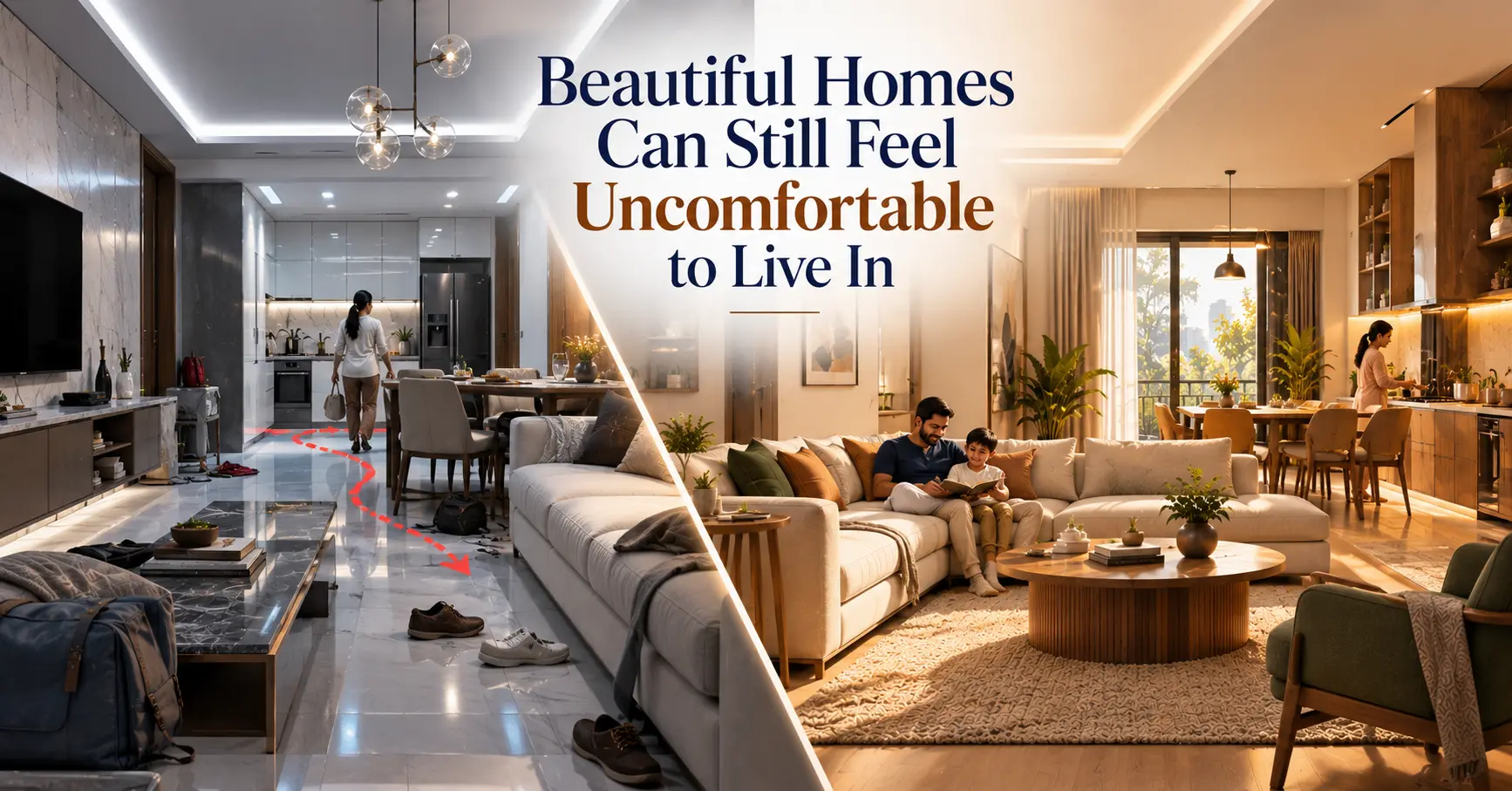
Your home looks stunning in photographs. The sofa is stylish, the false ceiling is flawless, and the wall colours are on trend. Yet by Tuesday evening, something feels off. You keep bumping into furniture, the living room glares at night, and the kitchen drawers are never where your hands expect them. It’s a common frustration: a beautiful home that doesn’t feel comfortable to live in.
The reason is simple. Appearance is what you notice once. Usability is what you experience every day. Design that only photographs well often ignores how people actually move, cook, rest, store things, and unwind. This blog goes beyond aesthetics into the everyday usability of residential interiors.
Beauty Is Static, Living Is Dynamic
People usually judge a designed space standing still, at handover, with perfect styling and no clutter. But a home is used in motion: during the morning rush, while cooking, when guests arrive, and when a child does homework at 9 PM.
Interiors fail when they are designed for the photograph rather than the routine. A glossy console that collects fingerprints, a statement chandelier that makes the room too bright for TV, and a sleek handle-less cabinet that’s awkward to open with wet hands all look great. They also quietly irritate you every day.
The Hidden Culprits Behind an Uncomfortable Home
1. Poor Circulation and Layout
Furniture placed to look good rather than to flow creates pinch points you navigate around daily. Walkways should let you move comfortably without sidestepping. When the dining chairs block the kitchen path or the bed leaves a cramped gap to the wardrobe, comfort drops, even if every piece is beautiful.
2. Lighting That Looks Good but Works Badly
Decorative lighting is often prioritized over functional lighting. Common problems include:
- One harsh, central light with no softer layers for evenings
- No task lighting where you cook, study, or apply makeup
- Cool white lights in bedrooms that disturb relaxation
- Glare or reflections on glossy surfaces and screens
Good residential lighting is layered: ambient, task, and accent working together, ideally with dimming control.
3. Storage Designed for Show, Not for Stuff
Real households have real belongings: bulky vessels, school bags, shoes, festival items, and appliances. Minimal designs that hide nothing and store little quickly become cluttered. Clutter is the fastest way to make any beautiful home feel stressful.
4. Ignoring Climate and Ventilation
In humid, warm regions like Tamil Nadu, a home with poor cross-ventilation, heat-trapping glass, or moisture-prone materials will feel uncomfortable regardless of how it looks. Comfort is physical before it’s visual.
5. Acoustic Discomfort
Hard surfaces, such as tiles, glass, and bare walls, with no soft furnishings create echo and noise. Conversations feel tiring, TV volume climbs, and the home never feels truly restful.
6. Ergonomics Overlooked
People rarely notice counter heights, seating depth, switch positions, and shelf reach until they’re wrong. A kitchen counter at the wrong height or a dining table that doesn’t suit the chairs creates daily physical strain.
Looks vs Livability: A Quick Comparison
Design Aspect | Designed for Looks Only | Designed for Everyday Living | Daily Impact |
|---|---|---|---|
Layout | Furniture placed for visual symmetry | Furniture placed around real movement paths | Easy, natural flow vs. constant sidestepping |
Lighting | Statement fixtures, single-source glare | Layered ambient, task, and accent lighting | Eye comfort and better mood regulation |
Storage | Minimal visible storage, hidden chaos | Zoned storage matching real belongings | Less clutter, less stress |
Materials | Glossy, delicate finishes | Durable, easy-to-clean, climate-suitable finishes | Lower maintenance and lasting appearance |
Kitchen | Beautiful but impractical workflow | Work-triangle planning, reachable storage | Faster, less tiring cooking |
Acoustics | Hard, echoing surfaces | Soft furnishings, balanced textures | Calmer, quieter living |
Ventilation | Sealed, styled spaces | Cross-ventilation and heat-aware design | Fresher, cooler rooms |
Ergonomics | Standard sizes for aesthetics | Heights and reach adapted to the family | Less physical strain |
How to Design (or Fix) a Home for Everyday Comfort
Before choosing finishes, ask practical questions:
- How do we actually use each room in the morning, afternoon, and at night?
- What do we need to store, and how much of it?
- Who lives here: children, elders, pets, or work-from-home professionals?
- What bothers us about our current home today?
Then apply these principles:
- Plan circulation first, then furniture and décor
- Layer your lighting with dimmers and task-specific sources
- Zone your storage: daily-use items within easy reach, occasional items higher or deeper
- Choose materials for your climate and maintenance capacity
- Balance hard and soft surfaces to control echo and add warmth
- Customize ergonomics to the people who use the space
You can often improve existing homes without a full makeover. Smarter storage, lighting changes, layout adjustments, and space optimization through targeted renovation can transform how a home feels. These upgrades fall under home and office renovation services.
Why Professional Planning Changes the Outcome
Most discomfort starts at the planning stage, when people choose from inspiration images instead of measured, lived-in logic. A good designer studies how you live, not just how you want the home to look, and balances aesthetics with workflow, ventilation, lighting, and storage.
Northwest Interiors follows this approach, combining modular kitchens, wardrobes, storage units, false ceilings, and furniture into spaces planned around real daily use. To see how this works in practice, explore their completed projects for ideas on how good-looking spaces can also be practical. Homeowners in the city can also look at their dedicated home interior services in Chennai for locally relevant solutions.
Key Takeaways
✅ A home that looks beautiful isn’t automatically comfortable. Comfort comes from how a space performs day to day.
✅ Layout, lighting, storage, ventilation, acoustics, and ergonomics are the six pillars of livability.
✅ Start with your routines, not trends, when planning interiors.
✅ Small frictions add up. Fix them early, ideally at the design stage.
✅ Choose materials for your climate and upkeep capacity, not just visual appeal.
✅ Existing homes can be improved through targeted renovation, not only complete redesigns.
✅ Professional planning prevents costly corrections after the work is done.
Final Thought
The best interiors aren’t the ones that impress visitors for ten minutes. They’re the ones that quietly support you for ten years. A truly well-designed home looks beautiful and feels effortless to live in.
Does Your Home Look Great but Feel Wrong?
Let’s figure out why. Share your space details and get a practical, livability-focused estimate from our design team. We’ll look at layout, lighting, storage, and everyday comfort, not just finishes. Get your personalized estimate here and start designing a home that works as beautifully as it looks.

