

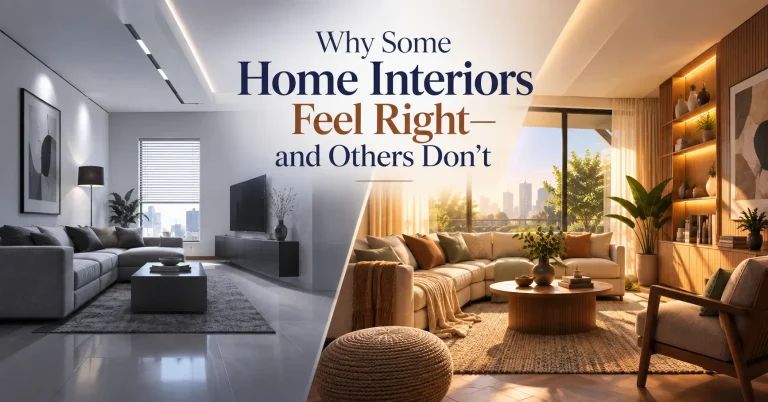
You’ve felt it before—walking into a home that instantly feels warm, balanced, and comfortable, versus one that’s beautifully furnished yet strangely unsettling or cold. This isn’t random. Interior design psychology reveals specific principles that separate spaces that genuinely feel “right” from those that merely look good in photographs.
The Science of “Feeling Right”
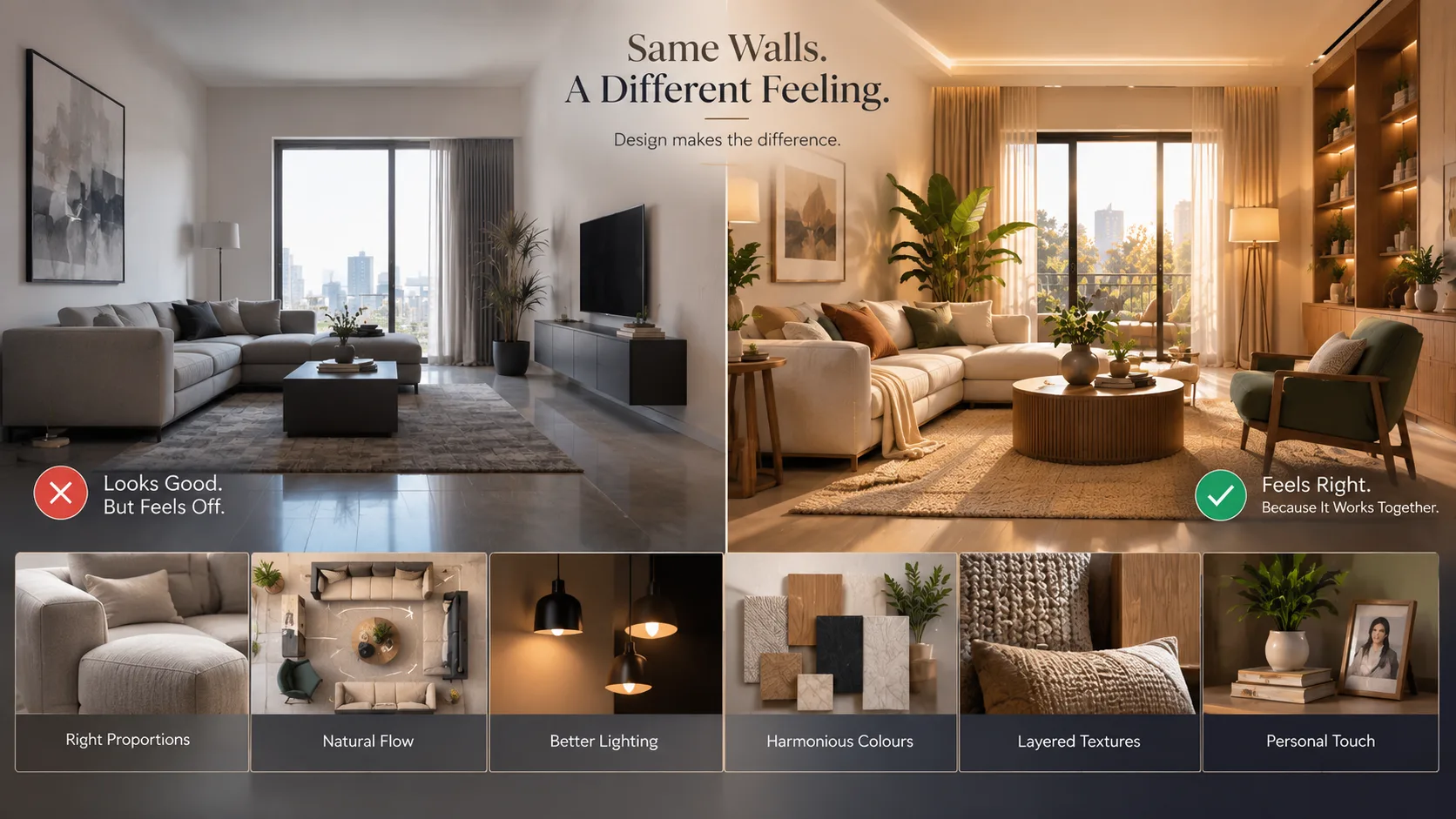
Environmental psychology explains that our brains process spaces holistically—not just visually, but through proportion, flow, light, and sensory harmony. When these elements align, we experience subconscious comfort. When they clash, even subtle discord creates unexplainable unease, regardless of how expensive the furniture is.
Proportion and Scale Harmony
Mismatched proportions are among the biggest culprits behind spaces that feel “off.” Oversized furniture in small rooms creates claustrophobic tension, while undersized pieces in large spaces feel lost and impersonal.
Signs of proper proportion:
- Furniture scaled appropriately to room dimensions
- Breathing room between pieces without empty, sterile gaps
- Ceiling height consideration in furniture and lighting selection
- Visual weight balance across the room (not all heavy pieces on one side)
The Flow Factor
Spatial flow—how naturally you move through a space—profoundly affects comfort levels. Homes that feel right allow intuitive movement without obstacles, awkward pinch points, or confusing pathways.
Poor flow forces people to navigate around furniture unnaturally, creating subconscious friction every time they move through the space, even if they can’t articulate why it feels wrong.
Lighting: The Invisible Mood-Maker
Lighting quality impacts comfort more than almost any other element. Spaces with harsh, single-source lighting feel clinical and uninviting, while layered lighting—combining ambient, task, and accent sources—creates warmth and dimension.
Right-feeling spaces typically have:
- Natural light maximization through thoughtful window treatments
- Warm colour temperature (2700-3000K) for residential warmth
- Multiple light sources eliminating harsh shadows
- Dimming capabilities for mood flexibility
Colour Psychology and Cohesion
Disjointed colour schemes—even with beautiful individual colours—create visual chaos that subconsciously unsettles occupants. Harmonious spaces maintain consistent colour logic throughout, whether through complementary palettes or thoughtful transitions between rooms.
Material Texture and Sensory Balance
Spaces feeling cold or sterile often lack textural variety. Genuine warmth comes from layering different textures—soft textiles against hard surfaces, natural materials alongside manufactured ones.
Texture balance checklist:
- Soft elements (rugs, cushions, curtains) softening hard surfaces
- Natural materials (wood, stone, plants) adding organic warmth
- Varied surface finishes preventing monotonous sameness
- Personal, tactile objects creating lived-in authenticity
Comparing “Right” vs “Wrong” Feeling Spaces
| Design Element | Spaces That Feel Right | Spaces That Feel Off |
|---|---|---|
| Proportion | Furniture scaled to room size | Oversized or undersized pieces |
| Lighting | Layered, warm, multiple sources | Single harsh source, cold tones |
| Flow | Intuitive, obstacle-free movement | Awkward pathways, blocked areas |
| Color | Cohesive palette throughout | Disjointed, clashing schemes |
| Texture | Varied, layered materials | Flat, monotonous surfaces |
| Personal Touch | Authentic, lived-in details | Showroom-perfect, impersonal |
| Sound | Acoustically balanced, quiet comfort | Echoey, harsh acoustics |
The Missing Ingredient: Personal Authenticity
Perhaps most importantly, truly comfortable homes reflect the genuine personality and lifestyle of occupants rather than following trends unquestioningly. Showroom-perfect interior spaces often feel strangely impersonal precisely because they lack authentic personal narrative.
Creating Spaces That Truly Feel Right
Achieving this elusive “rightness” requires understanding design psychology alongside technical execution—a combination that comes from experienced professional insight, not trend-following alone. It’s about reading a space’s potential and understanding how human perception responds to spatial decisions.
When designing a home that genuinely feels right for your family, working with designers who understand both aesthetic principles and human psychology makes the difference between a house that looks good and a home that truly feels good. Northwest Interiors brings this holistic design philosophy to every project across Chennai, Madurai, Trichy, and Coimbatore, creating homes that don’t just impress visitors—they genuinely comfort the people who live there.
The spaces that feel “right” aren’t accidents—they’re the result of thoughtful decisions honouring both design principles and human nature.
Call to Action (CTA):
Discover What’s Missing From Your Home’s Comfort!
Book a FREE “Feel-Right” home assessment! Our designers will walk through your space, identify what’s creating subtle discomfort, and recommend targeted changes—no complete renovation required. Sometimes small shifts create the biggest difference. Schedule your home comfort assessment – Transform how your home feels, not just how it looks!